
The Bishop Score: How Your Body Prepares for Birth (And Why That Matters)

Pregnancy is one of the most beautifully coordinated processes in nature. For months your body has been quietly preparing for the arrival of your baby. As your due date approaches, another remarkable shift begins — your body starts preparing for labor.
One of the ways doctors and midwives observe this preparation is through something called the Bishop Score.
While the name may sound clinical, the idea behind it is actually quite simple. It’s a way of measuring how ready the cervix is for labor.
For many of the pregnant patients we see in our chiropractic practice, understanding these natural changes helps replace uncertainty with confidence.
What Is the Bishop Score?
The Bishop Score is a system healthcare providers use near the end of pregnancy to evaluate how prepared the cervix is for labor.
Think of the cervix as the doorway to the uterus. For most of pregnancy, that doorway stays closed, firm, and positioned toward the back of the pelvis.
But as the body prepares for birth, the cervix begins a process called cervical ripening. During this time it gradually:
• Softens
• Shortens
• Moves forward
• Begins to open
The Bishop Score simply measures these changes during a gentle examination.
The higher the score, the more the body appears to be preparing for labor.
What Does the Bishop Score Measure?
There are Five features are assessed during the examination:
1. Cervical Dilation
This refers to how open the cervix is, measured in centimeters.

2. Cervical Effacement
Effacement describes how thin the cervix has become. As labor approaches, the cervix shortens and thins out.
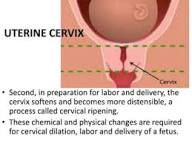

3. Cervical Consistency
Early in pregnancy the cervix feels firm, almost like the tip of your nose. As labor approaches it becomes softer.
4. Cervical Position
During most of pregnancy the cervix sits toward the back of the pelvis. As labor nears it moves toward the front.

5. Fetal Station
This describes how far the baby's head has moved down into the pelvis.

Each of these elements receives a score, creating a total that ranges from 0 to 13.
Generally speaking:
• 0–4: The cervix is not yet very ready for labor
• 5–7: The body is beginning to prepare
• 8 or higher: The cervix is considered favorable for labor
It’s important to remember that this score is simply a snapshot in time. The body can change
quickly as labor approaches.
The Burnett Modification of the Bishop Score
Some providers use a variation called the Burnett modification of the Bishop Score.
This modification adjusts how certain factors are scored to help clinicians better predict the success of labor induction.
For example, the modified system may place slightly different emphasis on:
• Cervical dilation
• Effacement (or cervical length)
• The baby's position in the pelvis
Both versions are simply tools that help healthcare providers observe the natural process your body is already moving through.
Supporting Your Body During Pregnancy
As a chiropractor who cares for many pregnant women, my focus isn’t on scoring the cervix. Instead, my goal is to help your body move, adapt, and function as comfortably as possible throughout pregnancy.
As your baby grows, your body experiences significant changes:
• Your center of gravity shifts
• Pelvic ligaments soften
• The spine adapts to support a growing uterus
Gentle chiropractic care during pregnancy may help support:
• Pelvic balance
• Reduced tension in surrounding muscles and ligaments
• Improved mobility and comfort
• A more balanced environment for your baby
Many expectant mothers tell me they simply feel more comfortable, sleep better, and move more easily after care.

Your Body Already Knows What to Do
One of the most reassuring things to remember during pregnancy is this: your body was designed for this process.
The Bishop Score is simply a way healthcare providers observe the signs that your body is preparing for birth.
With the support of your healthcare team — and a focus on keeping your spine and pelvis balanced — you can move into the final weeks of pregnancy with greater confidence and comfort.
If you’re pregnant and wondering whether chiropractic care could help support you during this time, I'm always happy to talk and answer your questions.
Your body is doing something extraordinary — and I'm here to support you along the way.

